
Overview
Since 1957, The Women’s Home has worked to build whole lives in the Houston area. We currently have four unique programs: a residential treatment and transitional housing program, two permanent supportive housing programs, and a collaborative service center that offers support services to help prevent and end homelessness in our community.
Our Mission
Our mission is to build communities that strengthen women and support families as they reclaim their stability. At The Women’s Home, we envision a world in which every woman embraces her unique value and potential for a life filled with love, dignity and purpose.
We employ a unique model of care called WholeLife®. By embracing the whole person, The Women’s Home prepares women and their families to become empowered and productive forces in their communities.
At The Women’s Home, we have always been committed to providing opportunities and support for any woman of any race who is ready to do the hard work of reclaiming her life. Over 80% of the individuals served by our growing continuum of care and almost 70% of our staff members identify as persons of color. The Women’s Home remains actively committed to creating an environment that fosters racial equity, within our walls and beyond.
Our core values include Dignity, Integrity, Stewardship, Wholistic Growth and Inclusiveness.
Our Unique Approach: The WholeLife Model
In 2022, The Women’s Home was selected as one of 10 winners across the country for the Substance Abuse and Mental Health Services Administration (SAMHSA)’s first-ever behavioral health Recovery Innovation Challenge. See video above.
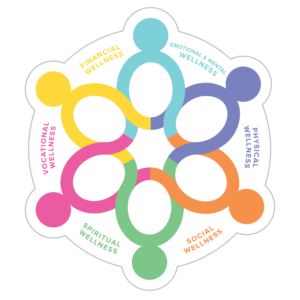
In order to give the women and families we serve a real chance at developing successful, productive lives, we believe services must address each person holistically. That’s why we developed a model of care called WholeLife® which distinguishes us from other programs and organizations with a similar focus (read more about our results here). Rather than focusing on an isolated issue, such as addiction, we address six different areas of wellness: emotional/mental, financial, physical, social, spiritual and vocational.
Emotional/Mental Wellness
The effort to cultivate emotional and mental wellness focuses on providing resources for clients to break unhealthy behavior cycles and develop coping skills for dealing with addiction and mental health issues. We offer group and individual therapy, as well as psychiatric services for clients in our treatment and transitional housing program. We also connect tenants of our Jane Cizik Garden Place facility with mental health professionals and services. Our programs are gender-specific, client-centered and evidence-based.
Financial Wellness
Financial struggles can limit access to important resources and cause stress that leads to relapse or unhealthy emotional conditions. That’s why we offer our clients access to financial literacy resources, so they can learn essential life skills. We partner with experts like The Women’s Resource, Neighborhood Centers and Easter Seals to provide programs such as planning and budgeting workshops, with strategies on building credit and reducing debt. We also assist our clients with opening savings accounts, and our case managers work individually with clients to apply skills they have learned in the classroom to real world situations.
Physical Wellness
Good physical health is invaluable to emotional and mental wellness. Our treatment and transitional housing program provides nutritionally balanced meals and helps clients build healthy eating habits with the guidance of a dietitian. We connect clients with needed medical services, and our housing facilities offer transportation and access to local food pantries. In addition, there is a fully stocked pantry at Jane Cizik Garden Place, with an inventory maintained by community volunteers. All of our facilities have on-site fitness equipment, and through the help of volunteers, clients have access to a variety of fitness classes.
Social Wellness
Maintaining healthy social relationships is an integral part of a stable support system. With the help of community volunteers, we provide clients with opportunities to attend social events, resources to organize events themselves and chances to connect and bond with others sharing similar interests. In addition, classes are offered to develop better relationship skills, healthy boundaries, conflict resolution and resident councils that work on community well-being. The relationships fostered between residents add a dimension of health and wellness because of intense social support through a network of women with similar life experiences.
Spiritual Wellness
We are an open, affirming, and non-affiliated organization that seeks to cultivate spirituality in our clients’ lives, regardless of the form that spirituality takes. We have clients from all walks of life, who have had such varied experiences and histories with their spirituality, that our program will only be successful if we meet clients where they are. Our supportive housing programs offer on-site meditation spaces for residents to reflect and recharge, while our residential treatment and transitional housing program invites clients to explore their spirituality through a program called Courage to Search in collaboration with the Institute for Spirituality and Health. Clients are exposed to different spiritual exercises and practices, including meditation, journaling, faith discussions, and prayer. Through participation in a non-denominational religious community, many of our clients discover an inner peace and strength that aids in their recovery process.
Vocational Wellness
Gainful employment provides far more than a paycheck. It contributes enormously to the growth of an individual’s self-esteem and sense of security. We provide vocational assessment and training for our treatment and transitional housing clients, ensuring that they find stable income before graduating. They are assisted by employment specialists who help secure jobs and a steady work history while in residence. Community volunteers at our permanent housing site offer job skills and career development training. Case managers assist in both locations with transportation, work-ready attire and other support needed to both get and keep sustaining jobs.
Treatment Approach
Trauma-Informed Treatment
Our services are designed to acknowledge the impact of violence and trauma on our clients’ lives and the importance of addressing trauma in treatment.
Strength-Based Treatment
We search for the positive potential in all of our clients and develop individualized treatment plans based on their strengths.
Gender-Specific Treatment
Our program recognizes that there are differences between men’s and women’s individual experiences and perspectives. We give particular attention to the individual characteristics of the women in our program and tailor our services to meet their gender-specific needs. By doing so, we address the issues that are unique to women and treat them accordingly.
Motivational Interviewing
We recognize that clients who need to make changes in their lives are often not ready to do so. Through motivational interviewing, our staff offers non-judgmental, non-confrontational and non-adversarial counseling to our clients. This method of counseling serves to increase clients’ awareness of the effects of their harmful behavior and motivates them to change.
OUR HISTORY
2017
- Opening of the Mabee WholeLife® Service Center.
2016
- Groundbreaking and construction on our new Mabee WholeLife® Service Center began in October 2016. The Women’s Home opened the doors to our new apartment community, Adele and Ber Pieper Family Place on October 17, 2016.
2015
- The Women’s Home broke ground and began constructing affordable housing for families on June 4, 2015. With a $3.5 million investment from the City of Houston, we have raised 80% of our campaign goal and plan to begin construction this spring.
2013
- The Women’s Home launched a $27 million capital campaign for our latest expansion project to develop an 84 unit family housing complex and community center in the Spring Branch area
2011
- The Women’s Home residential treatment and transitional housing program at our Montrose campus gained national recognition for our quality of service and commitment to providing research informed care. The Women’s Home is one of 15 agencies across the nation invited by SAMHSA (Substance Abuse and Mental Health Services Administration) to participate in a work group charged with identifying best practices in providing sober housing and treatment for women who are homeless.
2010
- Jane Cizik Garden Place is completed
1992-2009
- Paula Paust becomes Executive Director.
- Barbara’s House, named to honor former Executive Director Barbara Woodard, is built to provide a home for six additional women.
- The Women’s Home acquires properties in Montrose at 607 Westheimer and 811 Westheimer
1965-1989
- Property is purchased to create a residential campus in the Montrose neighborhood. A cottage and lot adjacent to the residence is purchased and becomes the first location of The Cottage Thrift Shop, now called The Cottage Shop.
- Barbara Woodard becomes Executive Director in 1974 and serves in that position for 17 years.
1957-1964
- The Women’s Christian Mission, as The Home is then called, opens its doors to women in need.
- The Women’s Home Auxiliary, the predecessor to our Partnership and Young Professionals group, is formed in 1963 to provide volunteer and financial support to The Home.